“From Farmlands to Homestays: The Changing Face of Wayanad”
Wayanad in Transition: The Changing Face of Real Estate and Tourism
For nearly 19 years, Wayanad Links has been closely involved in the real estate sector in Wayanad. During this period, we have witnessed remarkable changes in the way people view, buy, develop, and invest in land here.
Wayanad has always been known for its natural beauty, forests, mountains, paddy fields, streams, plantations, and peaceful villages. But over the past decade, particularly in recent years, the character of the real estate market has changed significantly.
From Local Land Market to a Wider Investment Destination
After the changes that began to emerge around 2012, Wayanad gradually started attracting investors from outside Kerala. Today, in 2026, the influence of social media has accelerated this trend considerably.
Almost every day, we see new real estate promoters and social media marketers showcasing properties across Wayanad. Their videos and advertisements reach audiences in Karnataka, Tamil Nadu, and other parts of India. As a result, more people from outside Kerala are now looking at Wayanad as an investment destination.
This has created both opportunities and challenges.
Land that was once valued mainly for agriculture, residential use, or its proximity to local towns is now being evaluated for its tourism potential, views, accessibility, and commercial possibilities.
The New Demand: Views, Streams and Tourism Potential
One of the biggest changes we have noticed is the growing demand for properties with attractive natural features.
Land overlooking paddy fields, properties with mountain views, small natural streams, forest surroundings, plantation landscapes, and peaceful locations have become highly sought after.
The reason is clear. Many investors are purchasing land with the intention of developing:
- Homestays
- Airbnb properties
- Resorts
- Farm stays
- Holiday villas
- Weekend homes
- Tourism-related businesses
Because of this demand, certain areas that were once relatively quiet real estate markets have experienced significant increases in land prices.
Areas around Mananthavady and Valat, among others, have seen this transformation. Social media promotion has made previously lesser-known locations visible to thousands of potential buyers, increasing both interest and competition.
What Will Wayanad Look Like in the Future?
This raises an important question.
What happens when agricultural land gradually changes hands from local farmers to outside investors?
If the present trend continues unchecked, there is a possibility that many traditional farming families could end up owning smaller and smaller pieces of land, while larger portions are converted into tourism properties.
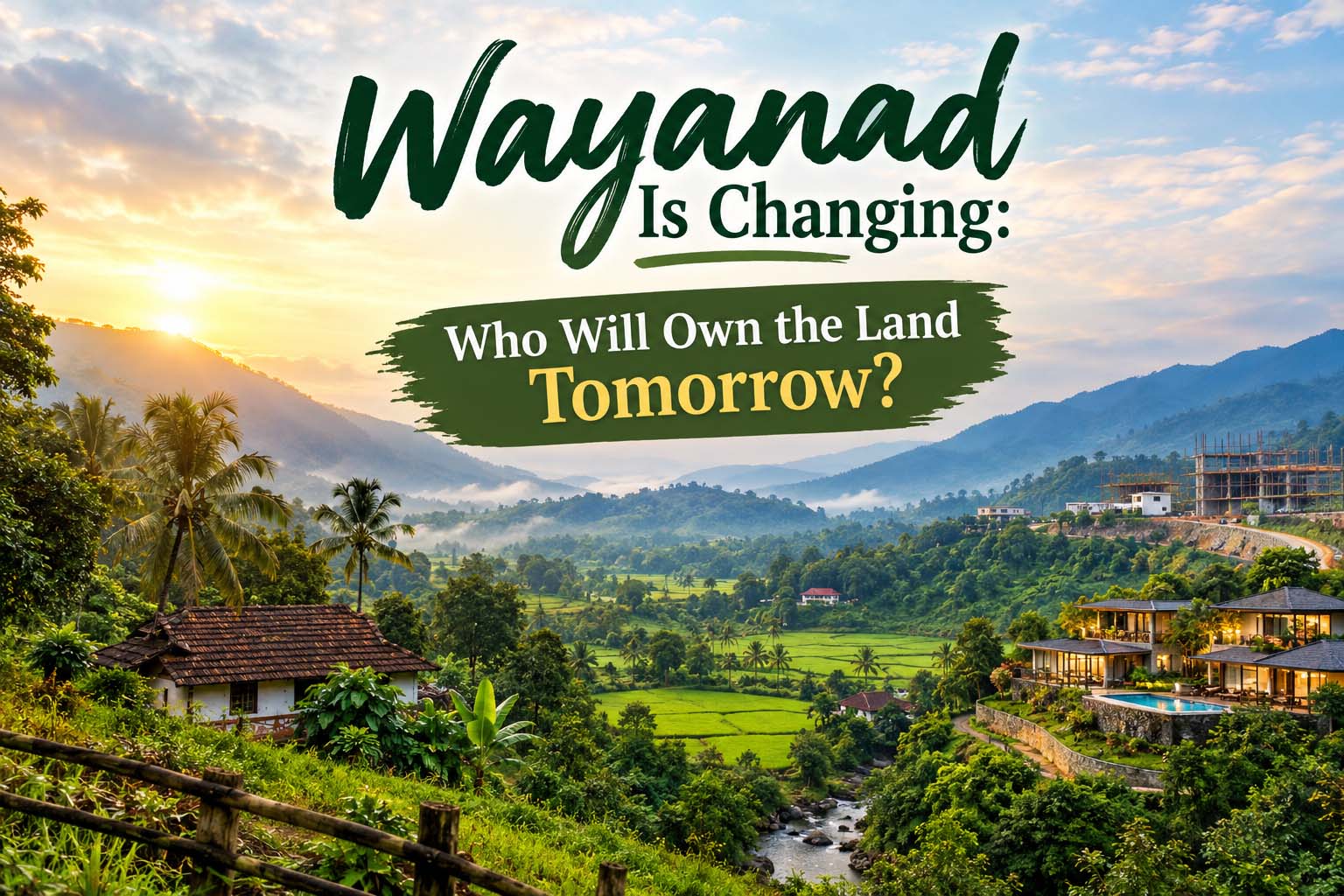
We may eventually see a Wayanad where the traditional agricultural landscape is surrounded by resorts, villas, homestays, and holiday properties.
Investment and tourism are not necessarily bad things. In fact, responsible tourism can create employment, improve infrastructure, and provide new opportunities for local communities.
But development without proper planning can also change the very character that makes Wayanad attractive in the first place.
A Personal Example: From One Homestay to Many
My own experience gives me a clear picture of how rapidly things have changed.
When I started my homestay in 2007, there were hardly any homestays in our panchayat. At that time, the concept was still relatively new in the area.
Today, the situation is completely different. The number of homestays has grown dramatically, from what was once around 25 to potentially 85 or more properties in the wider local area.
A significant number of these properties are owned or operated by people who have come from outside Kerala.
This transformation shows how quickly Wayanad’s tourism economy has expanded. But it also makes us think about whether development is happening at a pace that the environment and local communities can comfortably sustain.
The Changing Landscape of Wayanad
Another major concern is the physical transformation of the landscape.
Wayanad’s beauty comes from its trees, greenery, plantations, streams, hills, paddy fields, and open spaces. But as tourism properties increase, more trees are being cut and natural areas are being replaced with concrete structures.
Where there was once a simple plantation or green landscape, we now see villas, homestays, parking areas, pathways, and other concrete constructions.
Tourism infrastructure is necessary, but Wayanad should not lose the natural environment that tourists come here to experience.
There is a certain irony in building concrete properties by cutting trees to attract tourists who are coming to Wayanad specifically because of its greenery and natural beauty.
Development Should Not Mean Losing Wayanad
Wayanad needs investment. It needs employment opportunities. It needs responsible tourism and better infrastructure.
But development should happen with a long-term vision.
There should be clear guidelines regarding construction in environmentally sensitive areas, unnecessary tree cutting, conversion of agricultural land, waste management, water usage, and the density of tourism properties.
Instead of asking only “How much can we develop?”, we should also ask:
“How much can Wayanad sustainably support?”
The goal should not be to stop development. The goal should be to ensure that development and nature grow together.
Let Us Preserve What Makes Wayanad Special
The Wayanad of tomorrow should not simply be a collection of resorts and homestays.
It should still have farmers cultivating their land, paddy fields stretching across valleys, trees standing along roadsides, streams flowing through villages, plantations remaining green, and local communities continuing their traditional way of life.
Tourism should become a way of protecting Wayanad’s natural beauty—not a reason to destroy it.
After nearly two decades of watching Wayanad’s real estate market evolve, one thing is very clear:
Wayanad is changing. The question is not whether it will change, but how responsibly we choose to manage that change.
If we can find the right balance between investment, tourism, agriculture, local communities, and environmental protection, Wayanad can continue to prosper without losing its identity.
Let development come to Wayanad—but let Wayanad remain Wayanad.